

With millions of players worldwide, Texas Hold’em remains the preferred choice for poker enthusiasts who enjoy skill-based competition. Explore winning concepts, hand rankings, table strategies, and valuable insights that can help improve your decision-making throughout every poker session at TK999.
Discover the Top Features That Make Texas Hold’em a Global Poker Favorite
Texas Hold’em is the world’s most recognized poker variation, combining strategy, psychology, and competitive excitement in every hand. Unlike simple luck-based card games, it requires players to analyze situations, manage chips, and make calculated decisions throughout the game. This guide introduces the key concepts, gameplay structure, and strategies to help players enjoy a more informed poker experience on TK999.
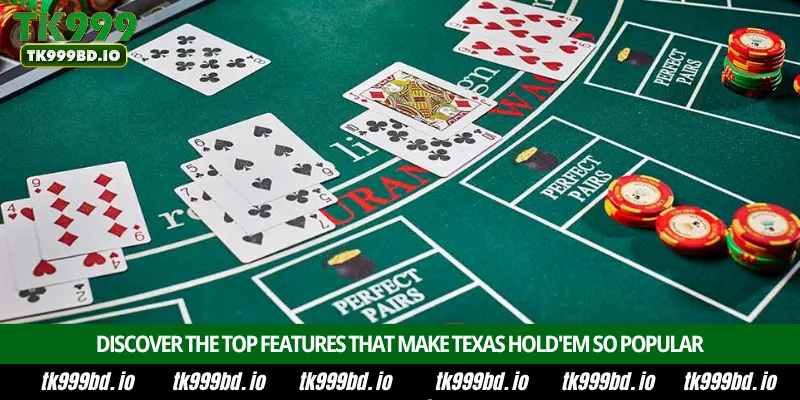
Simple Rules with Endless Strategic Possibilities
One of the biggest attractions of Texas Hold’em is its easy-to-understand gameplay. Each player receives two private cards and combines them with five community cards to create the strongest possible hand. Although the basic rules are simple, every decision involves multiple factors such as position, betting patterns, opponent behavior, and probability calculations.
This balance between accessibility and strategic depth allows beginners to quickly learn the fundamentals while giving experienced players endless opportunities to improve their skills.
Advanced Betting System for Tactical Decision-Making
The betting structure is one of the defining features of Texas Hold’em. Players can choose actions such as Check, Bet, Call, Raise, or Fold depending on their hand strength and table situation.
Smart betting is not only about having strong cards but also about controlling the pot size, applying pressure, and creating uncertainty for opponents. Understanding when to increase aggression or when to protect your bankroll is a key skill for long-term poker success.
Community Cards Create Exciting Turning Points
Unlike many poker formats, Texas Hold’em uses shared community cards that gradually reveal more information during each hand. The Flop, Turn, and River stages create multiple opportunities for players to improve their hands or change their strategies.
These unpredictable moments make every round exciting while rewarding players who can quickly adapt to new situations and calculate possible outcomes.
Real-Time Competition and Player Interaction
Modern Texas Hold’em platforms provide a dynamic environment where players can compete against opponents from different backgrounds. Features such as live tables, real-time actions, and interactive gameplay create a more realistic poker atmosphere.
At TK999, players can enjoy a competitive poker experience while testing their decision-making skills against different playing styles.
Flexible Game Formats for Different Playing Styles
Texas Hold’em offers various formats to suit different preferences, including Cash Games, Tournaments, Sit & Go events, and different betting limits. Each format requires a unique approach, allowing players to choose a style that matches their experience level and strategic goals.
Whether focusing on short sessions or long tournament battles, players can find suitable opportunities to develop their poker abilities at TK999.
The Invisible Power of Position in Texas Hold’em Strategy
In Texas Hold’em, position is one of the most important strategic elements that separates experienced players from beginners. While many players focus mainly on card strength, professional poker players understand that acting order can significantly influence decision-making and expected value. Having a better position provides more information about opponents’ actions, allowing players to control the size of the pot and make more accurate choices at TK999.

Early Position (UTG and Blinds): The Most Challenging Area
Early Position is considered one of the most difficult positions at the poker table because players must act before having information about their opponents’ decisions. The Under The Gun (UTG) position requires a highly selective playing strategy because several players behind still have opportunities to enter the pot.
Players in this position should apply a tighter starting hand range, focusing mainly on premium hands such as strong pocket pairs and high-value combinations. Avoiding unnecessary confrontations with marginal hands helps reduce difficult decisions after the flop.
Middle Position: The Zone Requiring Flexible Adjustments
Middle Position acts as a transition point between conservative early play and aggressive late-position strategies. Players here receive more information than those in Early Position but still have opponents waiting to act behind them.
Successful players adjust their hand range depending on previous actions at the table. If Early Position players show weakness, Middle Position can become an opportunity to apply pressure. However, caution is still required because stronger players in Late Position can exploit loose decisions.
Late Position (Button and Cutoff): The Ultimate Advantage at the Poker Table
Late Position, especially the Button, is widely considered the most powerful position in Texas Hold’em. Acting last after the flop provides a significant information advantage because players can observe how opponents react before making their own decisions.
The Button allows players to widen their starting hand range, steal blinds more frequently, and control the pace of the game. Since fewer unknown factors remain after observing opponents’ actions, late-position players can make more accurate bets, bluffs, and value plays.
Master the Four Betting Streets That Decide Every Texas Hold’em Hand
In Texas Hold’em, every betting round represents a new strategic decision where players must evaluate hand strength, opponent behavior, and potential risks. Understanding the four betting stages helps players determine when to build the pot, apply pressure, protect their chips, or make the right fold at the perfect moment. At TK999 Poker, mastering these stages is an essential skill for anyone looking to improve their poker strategy.

| Betting Stage | Main Characteristics | Key Strategy to Apply |
| Pre-Flop Betting | The first betting round begins after players receive two private cards. Decisions are mainly based on starting hand strength, table position, and opponent actions. | Select strong starting hands, consider your position, and avoid entering too many pots with weak combinations. Aggressive raises with premium hands can help control the action. |
| Flop Betting (Three Community Cards) | The first three community cards reveal potential combinations and significantly change the strength of each player’s hand. | Analyze possible draws, evaluate board texture, and decide whether to continue betting, check, or fold based on your hand’s potential. |
| Turn Betting (Fourth Community Card) | The fourth card provides additional information and often creates major shifts in hand strength. | Apply more careful decision-making by considering opponent ranges, improved combinations, and whether your betting line remains profitable. |
| River Betting (Final Community Card) | The final betting round determines whether players maximize value or minimize losses before the showdown. | Make accurate value bets with strong hands, use calculated bluffs when appropriate, and avoid unnecessary risks against likely winning ranges. |
Understanding these four betting stages allows players to approach every Texas Hold’em hand with a clearer strategy instead of making emotional decisions. By combining position awareness, hand evaluation, and disciplined betting techniques, players can improve their decision-making and enjoy a more strategic poker experience at TK999.
Read Opponent Psychology and Identify Different Poker Player Types
In Texas Hold’em, understanding opponent psychology can be just as important as analyzing your own cards. Every player has a unique playing style based on risk tolerance, aggression level, and decision-making habits. By identifying different opponent types, players can adjust their strategy, choose better moments to attack, and maximize their advantage at TK999.
| Player Type | Playing Characteristics | Effective Counter Strategy |
| Tight-Passive (The Rock) | Plays only premium hands, enters fewer pots, and rarely makes aggressive bets. This player prefers safety and avoids high-risk situations. | Apply controlled bluffs when they show weakness, especially in small pots. However, be cautious when they suddenly increase aggression because they often hold strong hands. |
| Loose-Passive (Calling Station) | Frequently calls bets with a wide range of hands but rarely raises. This type of player prefers staying in the hand rather than applying pressure. | Avoid bluffing because they are likely to continue calling. Focus on value betting with strong hands and extract maximum chips when you have an advantage. |
| Tight-Aggressive (The Shark) | Selective with starting hands but highly aggressive when entering a pot. They combine patience with strong betting pressure. | Avoid unnecessary confrontations without a strong hand. Analyze their betting patterns carefully and choose strategic moments to challenge their range. |
| Loose-Aggressive (The Maniac) | Plays many hands and constantly applies pressure through frequent bets and raises. Their unpredictable style can create large pots quickly. | Stay patient and avoid emotional reactions. Allow them to build the pot when you hold a strong hand, then use well-timed calls or raises to capture maximum value. |
| Balanced / Professional Player | Mixes different strategies, changes tempo frequently, and adjusts based on opponents. | Avoid predictable patterns and focus on position, betting history, and detailed opponent analysis to find weaknesses. |
| Beginner Player | Often relies on emotions, ignores position, and makes inconsistent betting decisions. | Apply simple pressure strategies, use stronger starting hands, and take advantage of their predictable mistakes. |
Mastering opponent classification allows players to move beyond simply focusing on their own cards and start making decisions based on table dynamics. By combining psychological analysis, positional awareness, and strategic adjustments, players can build a stronger Texas Hold’em approach and improve their overall poker experience at TK999.
Golden Mathematical Indicators That Help Make Accurate Betting Decisions
In Texas Hold’em, successful players do not rely only on instincts or emotions. Mathematical analysis plays a crucial role in determining whether a betting decision is profitable in the long term. By understanding important poker statistics and probability concepts, players can evaluate risks, calculate potential returns, and make smarter choices at TK999.

- Pot Odds: Calculate Whether a Call Is Worth Making. Pot Odds compare the current cost of calling a bet with the potential reward in the pot. By calculating the percentage needed to complete a profitable call, players can determine whether continuing in a hand is mathematically justified.
- Expected Value (EV): Measure Long-Term Profitability. Expected Value helps players understand whether a specific decision will generate profit or loss over many hands. Positive EV decisions, such as making profitable value bets or avoiding negative situations, are essential for long-term success.
- Equity Calculation: Estimate Your Winning Probability. Hand equity represents the percentage chance that your hand will win against an opponent’s possible range. Comparing your equity with the pot odds allows you to decide whether betting, calling, or folding is the most suitable action.
- Outs Counting: Identify Cards That Improve Your Hand. Outs are unseen cards that can strengthen your hand into a winning combination. Calculating the number of available outs helps players estimate drawing probabilities and avoid risky decisions with weak chances of improvement.
- Implied Odds: Consider Future Potential Winnings. Unlike basic pot odds, implied odds consider the additional chips you may win in future betting rounds if your draw completes. This concept is especially useful when playing hands with strong potential but uncertain immediate value.
- Bet Sizing Analysis: Optimize Risk and Reward Balance. Choosing the correct bet size can influence both opponent reactions and expected returns. Skilled players adjust their bet amounts based on hand strength, board texture, opponent tendencies, and overall table situation.
Applying these mathematical indicators allows players to make more objective decisions instead of depending on luck alone. Combining probability analysis with psychological reading and strategic discipline helps create a stronger Texas Hold’em approach at TK999.
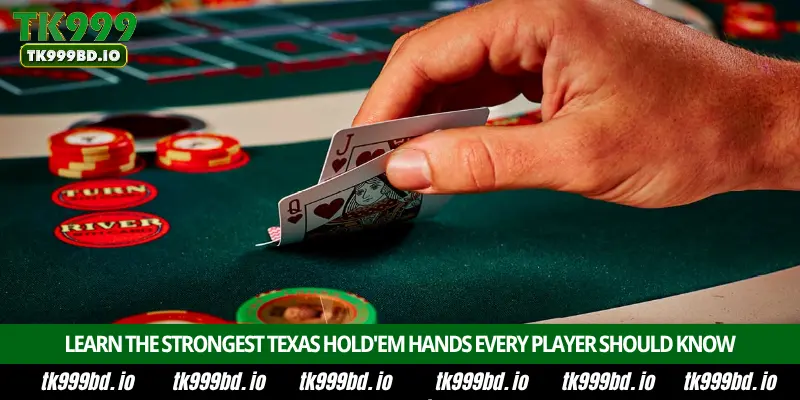
Discover the Strongest Texas Hold’em Hands Every Player Should Master
Understanding hand rankings is the foundation of successful Texas Hold’em strategy. Strong starting hands provide better opportunities to win large pots, while recognizing the value of each combination helps players make smarter decisions throughout every betting round. At TK999, mastering these powerful poker hands allows players to approach each session with greater confidence.
| Hand Ranking | Poker Combination | Strategic Value |
| Royal Flush | A, K, Q, J, 10 of the same suit. | The strongest possible hand in Texas Hold’em. Extremely rare but guarantees victory in almost every situation. |
| Straight Flush | Five consecutive cards of the same suit. | A premium hand with exceptional strength, usually capable of winning very large pots. |
| Four of a Kind (Quads) | Four cards with the same rank plus one additional card. | One of the most powerful combinations, difficult for opponents to defeat unless they hold an even stronger hand. |
| Full House | Three cards of the same rank combined with a pair. | A very strong hand that often dominates during post-flop and late betting rounds. |
| Flush | Five cards of the same suit, not necessarily consecutive. | A strong combination that can win many pots, especially when opponents hold weaker draws. |
| Straight | Five consecutive cards with different suits. | A valuable made hand that can create profitable betting opportunities when the board supports it. |
| Three of a Kind (Trips / Set) | Three cards with the same rank. | A strong hand that can become highly profitable when disguised well against opponents. |
| Two Pair | Two different pairs plus one additional card. | A playable combination that requires careful evaluation depending on board texture. |
| One Pair | Two cards with the same rank. | The most common made hand, but its strength depends heavily on kicker cards and community cards. |
| High Card | No matching combination, highest card determines the hand value. | The weakest category, usually requiring strategic bluffing or careful folding decisions. |
Knowing the ranking and practical value of each Texas Hold’em hand helps players avoid costly mistakes and choose better betting actions. However, strong hands alone are not enough—combining hand knowledge with position, opponent analysis, and mathematical strategy is the key to improving long-term performance at TK999.
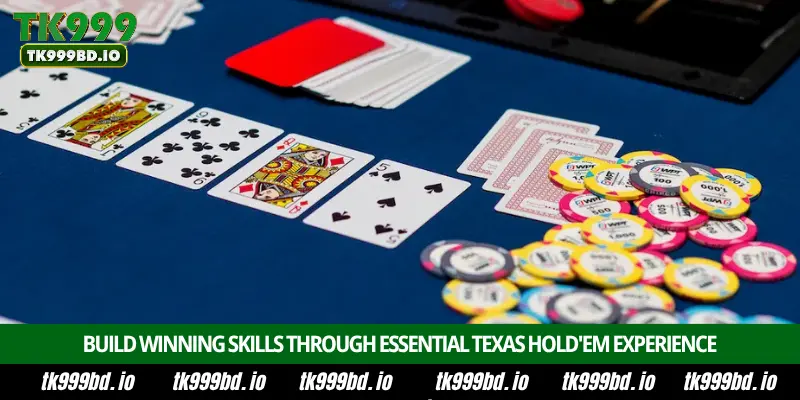
Essential Texas Hold’em Experiences to Improve Your Winning Strategy
Becoming a successful Texas Hold’em player requires more than understanding hand rankings. Experience, discipline, and the ability to adapt to different table situations are key factors that separate casual players from strategic competitors. By applying practical lessons and developing consistent habits, players can improve their decision-making and enjoy a more effective poker journey at TK999.
- Master Starting Hand Selection Before Entering a Pot. Avoid playing too many weak hands simply because they look attractive. Experienced players carefully choose starting hands based on position, table action, and opponent tendencies to reduce unnecessary risks.
- Use Position Advantage to Control the Game Flow. Playing from a favorable position allows you to gather more information before making decisions. Take advantage of late positions such as the Button or Cutoff to apply pressure and maximize profitable opportunities.
- Learn to Read Opponent Betting Patterns. Pay attention to bet sizes, timing, and repeated behaviors instead of focusing only on visible cards. Understanding whether an opponent is aggressive, passive, or unpredictable helps you select the right counter-strategy.
- Control Emotions and Avoid Tilt During Losing Streaks. Even skilled players experience bad beats and unexpected losses. Maintaining emotional control prevents impulsive decisions and helps protect your bankroll during difficult sessions.
- Practice Smart Bluffing Instead of Bluffing Too Often. Successful bluffing requires timing, position, and understanding opponent ranges. Choose situations where your story makes sense instead of attempting random bluffs against every opponent.
- Manage Your Bankroll with Discipline. Set clear limits before playing and avoid risking too much on a single hand. Proper bankroll management allows you to handle short-term variance and continue improving over time.
- Review Previous Hands to Improve Your Skills. Analyzing past decisions helps identify mistakes and discover better alternatives. Keeping notes on important hands allows players to gradually refine their strategy and develop stronger poker instincts.
Applying these practical Texas Hold’em experiences helps players make more calculated decisions and build a stronger foundation for long-term improvement. Combining strategy, psychology, and responsible bankroll management creates a more rewarding poker experience at TK999.
Conclusion
Texas Hold’em is a strategic poker game that combines mathematics, psychology, and decision-making skills in every hand. Understanding betting rounds, hand rankings, opponent analysis, and bankroll management can help players develop a stronger gameplay approach. Explore professional poker features and a competitive gaming environment on TK999 to enjoy a more engaging experience.